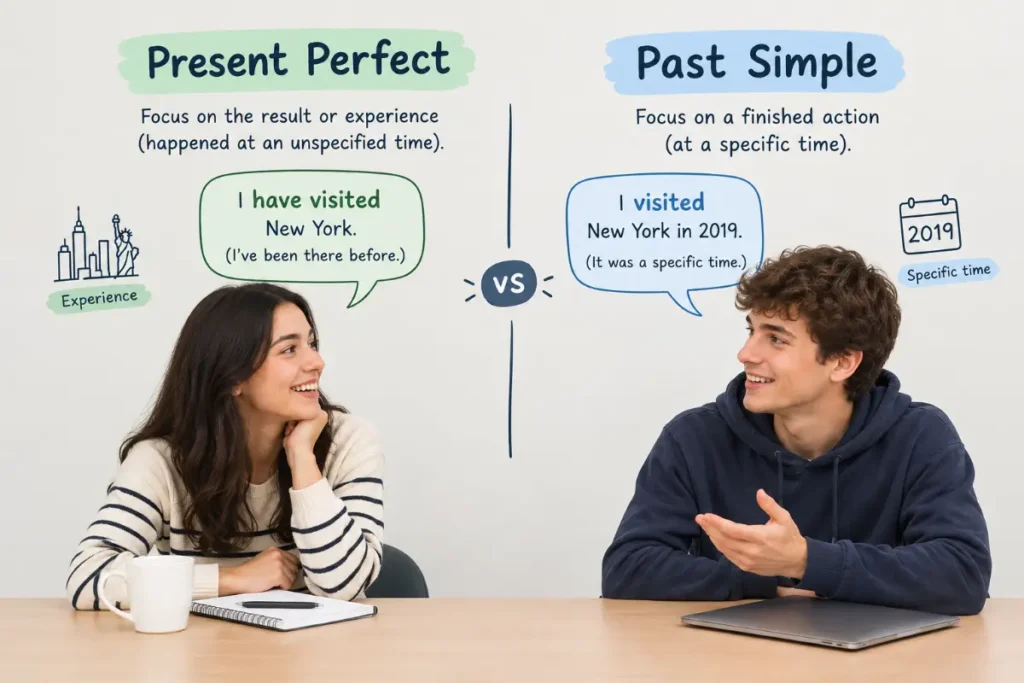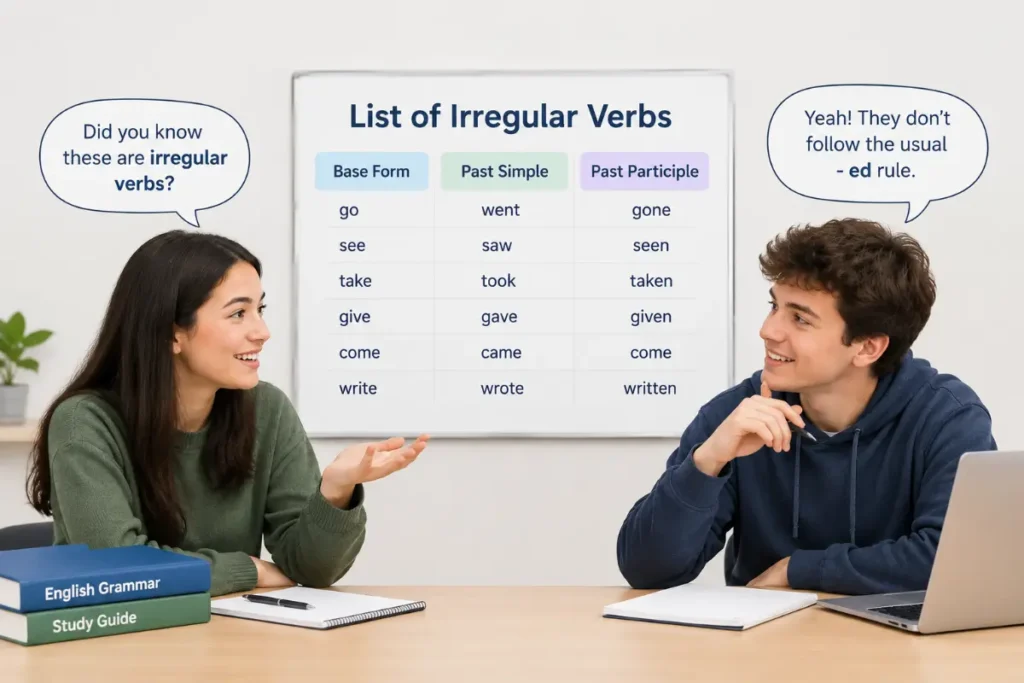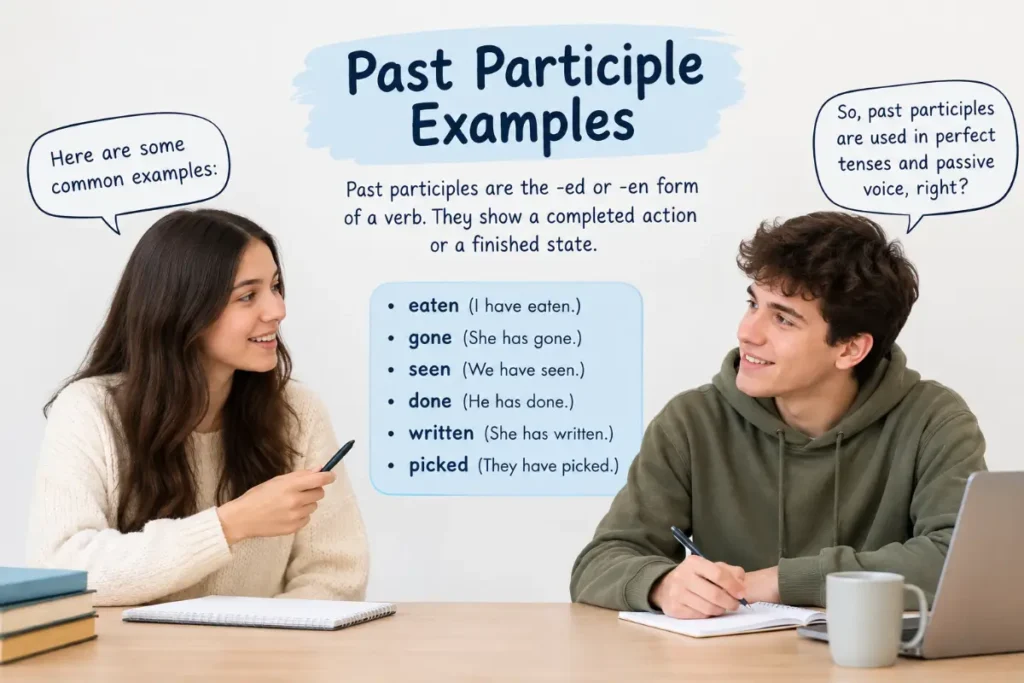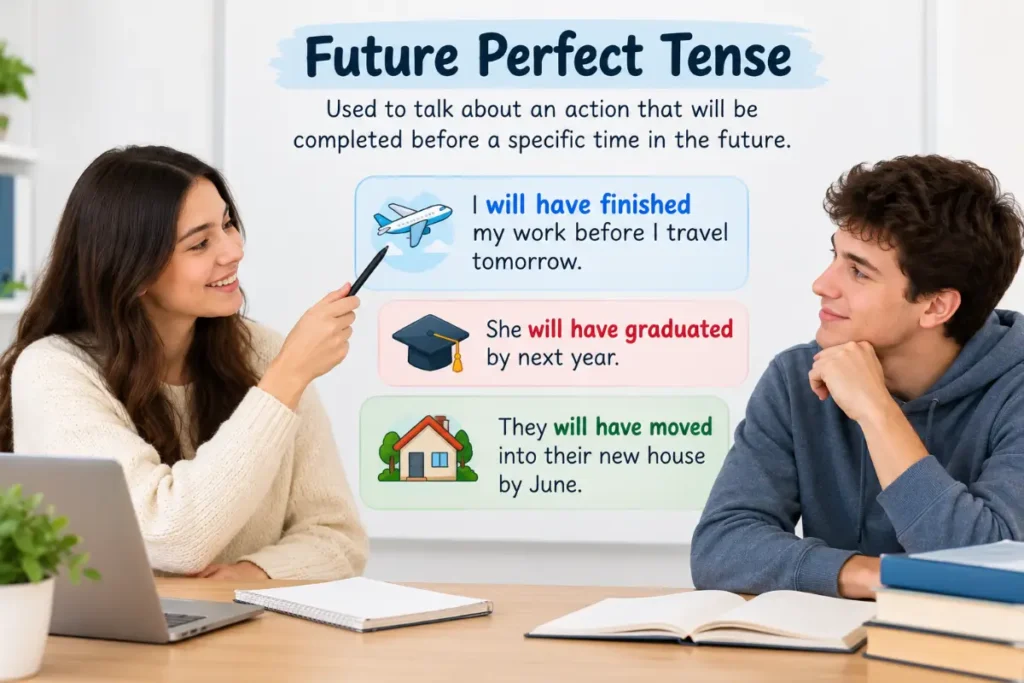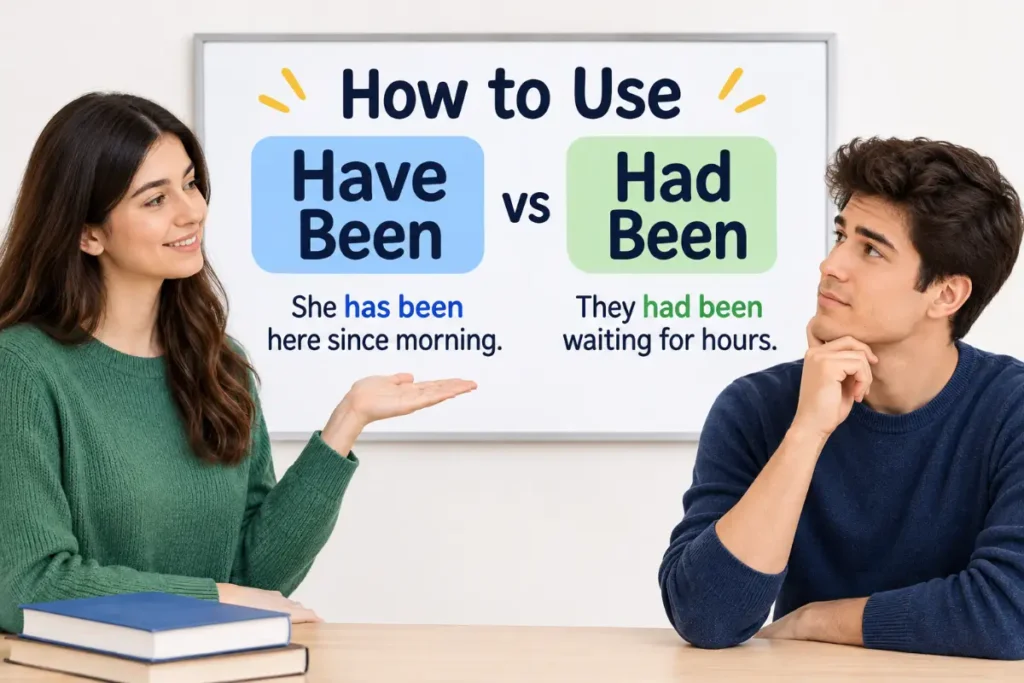
Learning how to use have been vs had been comes down to asking one question: connected to when? “Have been” links a past situation to the present moment. “Had been” links a past situation to an earlier point in the past, something that was already true before another event happened. The two forms look almost identical, which is why they cause so much confusion, but they live in different time frames.
Both also appear in two roles: as the main verb “be” (I have been here) and as a helper in continuous tenses (I have been waiting). This guide sorts out the reference-point idea, then covers each form in detail, the “been” versus “gone” distinction, contractions, passive forms, and professional writing. It finishes with common mistakes and 20 practice items with answers.
You may also find Use Will vs Going To: Simple Guide (2026) helpful if you want to explore this topic further.
The Core Idea: Where Is Your Reference Point?
Every perfect tense needs a reference point, a moment in time that the sentence is “looking back from.” For “have been,” that moment is now. For “had been,” it’s a moment in the past.
- I have been here since nine. (reference point: right now; I’m still here)
- When she arrived, I had been there since nine. (reference point: her arrival, earlier in the past)
Imagine a timeline with three marks: an earlier past point, a later past point, and now. “Had been” lives between the earlier and later past points. “Have been” stretches from the past up to now. The British Council’s LearnEnglish page on present perfect simple and continuous describes the present perfect as a way of linking the past to the present, which is exactly what “have been” does.
“Have Been” in Detail
Use “have/has been” in three main situations.
1. A situation that began in the past and continues now.
- They have been married for ten years. (still married)
- She has been the manager since March. (still the manager)
- We have been friends for years.
2. Life experience, with “been to.”
- I have been to Japan twice. (I visited and returned)
- Have you ever been to Peru?
3. A recent situation with present relevance.
- It has been a long week. (I’m still feeling it)
- There has been a power cut, so the lights are off.
With “for” and “since,” these sentences measure how long something has lasted up to now: for ten years, since March, for hours. The continuous version, “have been + -ing,” emphasizes an ongoing activity, and our guide to present perfect continuous tense examples covers it in depth.
“Had Been” in Detail
Use “had been” when you need to describe a situation that was already true before another past moment.
1. Backstory before a past event.
- By the time we called, he had been asleep for hours.
- Before the merger, the company had been losing money.
2. The cause or explanation of a past situation.
- She was tired because she had been working all night.
- The roads were icy; it had been snowing since dawn.
3. A discovery about a past state.
- I realized I had been in the wrong place all along.
4. Reported speech. A present perfect “have been” in direct speech turns into “had been” when you report it: “I’ve been waiting,” she said → She said she had been waiting.
5. Third conditionals. If I had been there, I would have helped. This is the past perfect of “be” inside an imagined past.
There must be two points in the past, whether you state both or only imply one. If you can’t identify the later point, “had been” probably isn’t the right choice. For the full continuous pattern, see our past perfect continuous tense rules.

“Been” vs. “Gone”
This related pair trips up many learners.
- She has been to Paris. (she visited and came back)
- She has gone to Paris. (she is there now, or on her way)
- They had been to the store, so the fridge was full. (they went and returned)
- They had gone to the store, so nobody was home. (they were away at that moment)
“Been” implies a completed trip with a return. “Gone” implies the person hasn’t returned yet.
Using “For” and “Since” With Each Form
“For” introduces a length of time; “since” introduces a starting point. Both work with both forms, but the reference point changes.
| Pattern | Reference Point | Example |
|---|---|---|
| have been + for/since | now | I’ve been here for two hours. |
| had been + for/since | a past moment | I’d been there for two hours when she arrived. |
Remember that “since” needs a starting point (since 9 a.m., since Monday, since 2020), and “for” needs a duration (for an hour, for years).
Continuous Forms Side by Side
Adding “-ing” turns either form into a continuous tense that emphasizes an ongoing activity.
- I have been working on this report all morning. (still working or just finished)
- I had been working on that report for hours when the power went out. (working before the blackout)
- She has been waiting since noon.
- She had been waiting since noon when he finally called.
Stative verbs such as know, own, like, and believe generally avoid continuous forms. Use the simple forms instead: I have known her for years, I had known him since childhood.
Contractions: ‘ve, ‘s, and ‘d
Spoken and informal English uses contractions heavily.
- I’ve been, you’ve been, we’ve been, they’ve been (have)
- he’s been, she’s been, it’s been (has)
- I’d been, you’d been, he’d been (had)
The tricky one is ‘d, which can stand for “had” or “would.” After a past participle like “been,” ‘d means “had”: I’d been waiting = I had been waiting. Also, ‘s can mean “is” or “has,” and context tells you which: She’s been working = She has been working, while She’s working = She is working.
Subject Agreement: Have vs. Has
“Have” goes with I, you, we, and they. “Has” goes with he, she, and it. “Had” never changes. If you want a refresher on matching verbs with subjects, our guide to subject verb agreement rules covers the details, including trickier cases such as collective nouns.
- The team has been working hard. (collective noun, singular)
- The players have been practicing.
- Everyone has been invited.
Passive Forms: “Has Been Done” and “Had Been Done”
The same verb combinations form passive sentences when followed by a past participle.
- The report has been finished. (completed; relevant now)
- The report had been finished before the meeting started. (completed earlier)
- The windows have been cleaned.
- The windows had been cleaned, so the room looked bright.
The reference-point logic is identical. For more on passive constructions, see our guide to active vs passive voice examples.
Questions and Negatives
- Have you been waiting long?
- Has she been to Italy?
- Had they been there before?
- I haven’t been feeling well.
- He hadn’t been paying attention.
For questions, invert the auxiliary and the subject. For negatives, add “not” after “have/has/had,” or use the contraction haven’t, hasn’t, hadn’t.
Professional Writing Examples
Status updates. We have been tracking the issue since Monday and expect a fix by Friday. (up to now)
Incident reports. By the time the alarm sounded, the technician had been working on the unit for an hour. (backstory before a past event)
Summaries and reviews. The company had been growing steadily until the market shifted in 2022. (past progress before a turning point)
Emails. I have been meaning to reach out (polite, ongoing) versus I had been meaning to reach out before you wrote (earlier intention, now past).
In professional writing, choosing between the two forms is often a way of marking whether information is current or background, which helps readers prioritize.
One Story, Three Verb Choices
Watching the same situation described from three viewpoints makes the difference concrete. Imagine a person named Dana who has worked at a bakery since 2015, while a customer, Leo, arrives at noon today.
Viewpoint 1: Now. Dana has been working at the bakery for nine years. The reference point is the present, so “has been” fits. The sentence tells us she’s still there.
Viewpoint 2: A past moment. When Leo arrived at noon, Dana had been baking since four in the morning. The reference point is Leo’s arrival, so “had been” fits. The baking started before he came in.
Viewpoint 3: A finished time. Dana was at the bakery at four this morning. No connection to now or another past moment is needed, so the simple past is enough.
Notice how the verb choice changes the question the sentence answers. “Has been” answers What’s the situation up to now? “Had been” answers What was already going on before that other event? And the simple past answers What happened then? Whenever you’re unsure, ask which of those three questions you’re really answering.

“Have Been” and “Had Been” in Conversation and Interviews
Everyday speech and professional conversations use these forms constantly.
Job interviews. I’ve been working in marketing for six years. (current experience) Before that, I had been teaching, so I moved into a very different field. (earlier background before a career change)
Small talk. Have you been waiting long? No, I just got here. I’d been stuck in traffic for an hour before that.
Customer service. We’ve been experiencing delays this week. (ongoing) Our team had been investigating the issue before your message arrived. (earlier activity)
For another useful perspective, check out 20 Conditional Sentences Examples (2026 Guide).
Medical history. I’ve been having headaches since March. I hadn’t been sleeping well for weeks before they started.
In each example, the first sentence stays connected to now, and the second reaches back to an earlier moment. Listening for that pattern in real conversations is a good way to train your ear.
Quick Reference
| Form | Reference Point | Example |
|---|---|---|
| have/has been | Now | I’ve been here since noon. |
| had been | An earlier past moment | I had been there since noon when she came. |
| have been + -ing | Ongoing up to now | I’ve been waiting for an hour. |
| had been + -ing | Ongoing up to a past moment | I had been waiting for an hour when it started. |
| has/have been done (passive) | Completed, relevant now | The work has been finished. |
| had been done (passive) | Completed before a past moment | The work had been finished before we arrived. |
Common Mistakes People Make
Mistake 1: Using “had been” with a finished past time. I had been to Paris last year. A finished time (“last year”) takes the past simple: I went to Paris last year.
Mistake 2: Using “have been” with “yesterday” or “last week.” I have been there yesterday. Use I was there yesterday.
Mistake 3: Mixing now and then. They had been married for ten years now. “Now” points to the present: They have been married for ten years now.
Mistake 4: Using “had been” without a second past point. She had been tired. Add the later moment: She had been tired when I called.
Mistake 5: Confusing “been” and “gone.” He has been to the store (visited and returned) is different from He has gone to the store (still away).
Mistake 6: Forgetting “been” in continuous forms. She has working all day. The correct form is has been working.
Mistake 7: Using “have” with a third-person subject. She have been here since noon. Use has been.
Practice Exercise
Choose “have/has been” or “had been,” or fix the sentence. Answers follow.
- I ___ here since 9 a.m. (have been / had been)
- When I arrived, she ___ there for an hour. (has been / had been)
- They ___ married for ten years now. (have been / had been)
- By the time we called, he ___ asleep for hours. (has been / had been)
- She ___ working here since 2019. (has been / had been)
- He was tired because he ___ working all night. (has been / had been)
- How long ___ you ___ waiting? (have been / had been) [now]
- The roads were icy; it ___ snowing all night. (has been / had been)
- We ___ friends for years. (have been / had been) [still friends]
- I realized I ___ in the wrong place all along. (have been / had been)
- ___ you ever ___ to Japan? (Have…been / Had…been)
- Before the merger, the company ___ losing money. (has been / had been)
- It ___ raining for three days now; the river is rising. (has been / had been)
- She said she ___ waiting for ages. (has been / had been)
- Fix: I had been to Paris last year.
- Fix: I have been there yesterday.
- “By 2020, they ___ together for a decade.” (have been / had been)
- “I’m exhausted; I ___ cleaning all day.” (have been / had been)
- “He didn’t pass the test because he ___ studying.” (hasn’t been / hadn’t been)
- “She ___ the manager since March.” (has been / had been) [now]
Answer Key
- have been
- had been
- have been
- had been
- has been
- had been
- have / been
- had been
- have been
- had been
- Have / been
- had been
- has been
- had been
- I went to Paris last year.
- I was there yesterday.
- had been
- have been
- hadn’t been
- has been
Frequently Asked Questions
Is “had been” always used with another past event?
Yes. It needs a later past reference point, either stated or clearly implied by the context. If there’s no second past moment, the past simple or present perfect usually fits better.
Can I use “have been” with “yesterday” or “last year”?
No. Finished times need the past simple: I was there yesterday. “Have been” connects to the present, so it can’t be paired with a time that’s completely over.
What’s the difference between “been” and “gone”?
“Been” means you went and came back. “Gone” means the person hasn’t returned. She has been to Rome means she visited; She has gone to Rome means she’s still there or on the way.
Do “have been” and “has been” mean different things?
No. “Has” is simply the third-person singular form (he, she, it). The meaning is identical.
Does “had been” change in reported speech?
It stays the same. A “had been” in direct speech remains “had been” when reported, because there’s no earlier tense to move to. A “have been” in direct speech becomes “had been.”
What’s the fastest way to choose between them?
Ask whether your reference point is now (have been) or a moment in the past (had been). If you can’t point to a second past event, “have been” or the past simple is probably what you need.
Before moving on, you may also want to read Third Conditional Examples: Imagining a Different Past (2026) for more helpful grammar tips.
Wrapping Up
The shortcut for how to use have been vs had been is to identify the time point your sentence connects to. If the connection runs to now, use “have/has been.” If it runs to an earlier moment in the past, use “had been.” Add “-ing” for ongoing activity in either case, and switch to the simple past for finished times such as “yesterday” or “last year.”
Keep the “been” versus “gone” distinction in mind, watch your contractions (especially ‘d), and always check for the second past moment before choosing “had been.” With those habits in place, the perfect tenses stop feeling like a maze and become a reliable way to organize time in your writing.