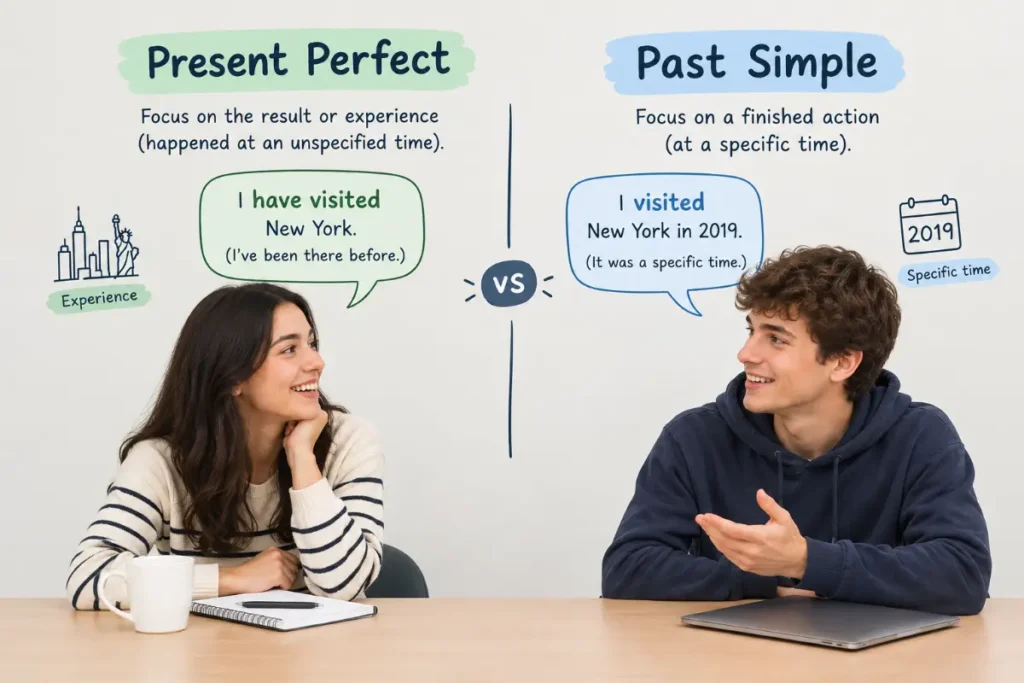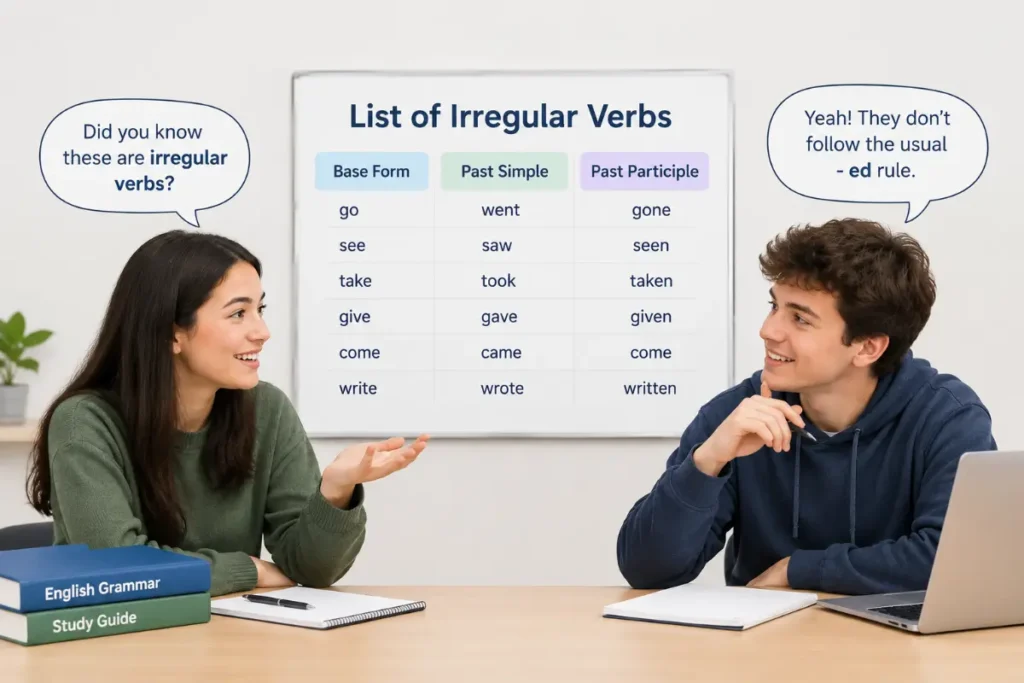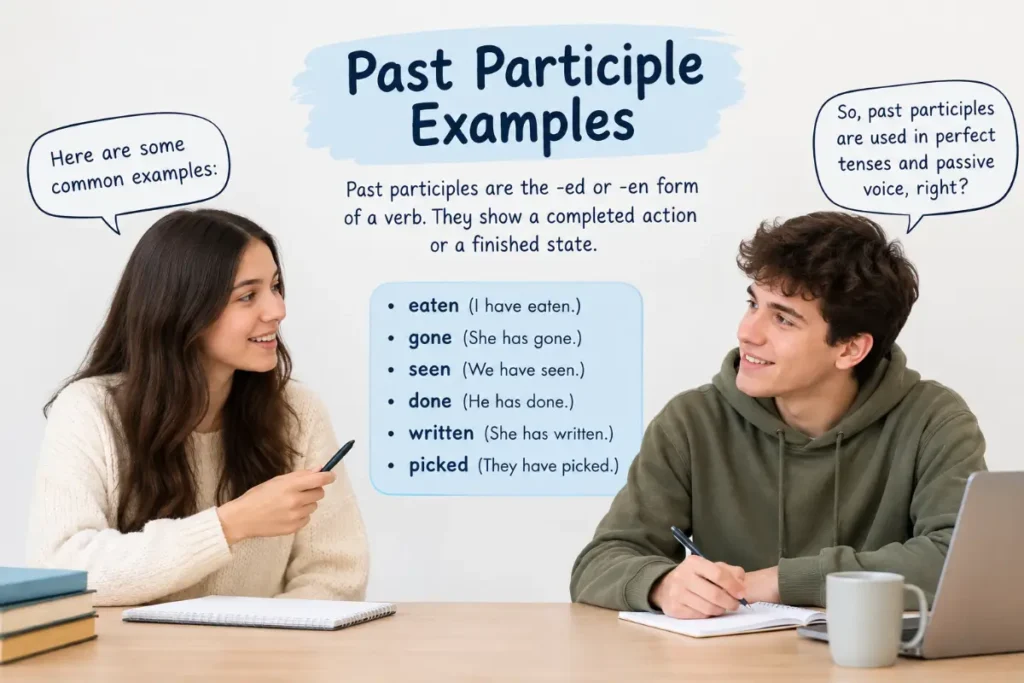
The past perfect continuous tense rules come down to one idea: this tense lets you show what had been going on before another moment in the past. It’s the tense of backstory. When you say “Her eyes were red because she had been crying,” you’re explaining the cause of a past situation by stepping one level further back in time.
It sounds complicated, but the structure is simple, and once you see the three jobs the tense performs, you’ll recognize it almost everywhere in storytelling and reported speech.
You may also find Use Will vs Going To: Simple Guide (2026) helpful if you want to explore this topic further.
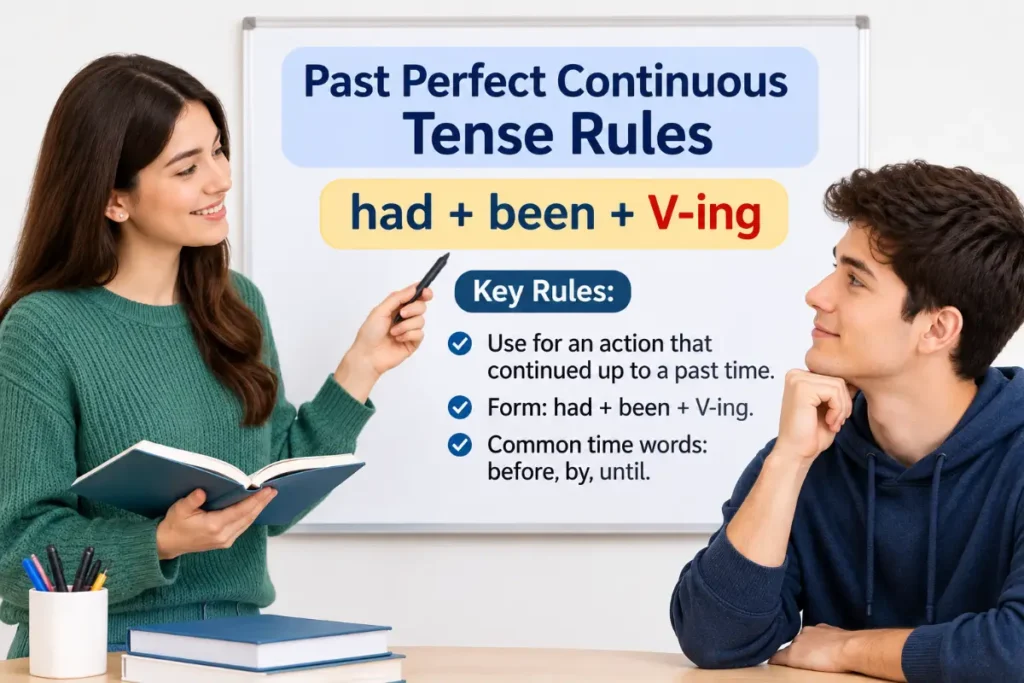
The Formula
had + been + verb-ing, and it stays the same for every subject.
- I had been waiting.
- She had been working.
- They had been talking.
- He hadn’t been sleeping. (negative)
- Had you been driving long? (question)
Rule 1: Show How Long Something Went On Before a Past Moment
The most common use is duration up to a point in the past. “For,” “since,” and “how long” often appear.
- By noon, we had been driving for six hours.
- When the power went out, we had been talking for an hour.
- She had been living in Paris for years before she moved.
Notice there are two past points: the earlier ongoing activity (driving, talking, living) and the later reference moment (noon, the blackout, the move).
Rule 2: Explain the Cause of a Past Situation
The tense is perfect for giving the reason behind something you can see or notice in the past.
- His hands were dirty. He had been working in the garden.
- The road was wet. It had been raining all night.
- She looked exhausted because she had been studying since dawn.
Here, the earlier activity doesn’t need a time phrase. The result you describe is the link.
Rule 3: Use It for Repeated Activity Before a Past Time
The tense can describe something that happened repeatedly or continuously up to a past moment.
- He was a wonderful guitarist. He had been playing since he was a teenager.
- They had been meeting every Friday until the café closed.
The Cambridge Dictionary grammar guide on past perfect simple or continuous gives a deeper comparison of when each form fits best.

How to Form Negative and Interrogative Sentences in the Past Perfect Continuous Tense
The past perfect continuous tense is easy to use in negative sentences and questions because the helping verb had stays the same for every subject. You only need to change the position of not or move had before the subject.
Negative Sentence Structure
Use this formula:
Subject + had + not + been + verb-ing + rest of the sentence
Examples:
- I had not been sleeping well before the exam.
- She had not been working there for very long.
- They had not been waiting when the manager arrived.
- He hadn’t been feeling well before the meeting.
- We hadn’t been practicing regularly before the competition.
You can use hadn’t instead of had not in everyday writing and conversation. Both forms are correct.
Interrogative Sentence Structure
To ask a yes-or-no question, place had before the subject.
Had + subject + been + verb-ing + rest of the sentence?
Examples:
- Had you been waiting long before the bus arrived?
- Had she been studying before you called?
- Had they been working on the project all day?
- Had he been sleeping when the alarm went off?
- Had we been talking for too long?
WH-Question Structure
When asking for specific information, put a question word such as why, where, what, or how long at the beginning.
WH-word + had + subject + been + verb-ing + rest of the sentence?
Examples:
- How long had you been waiting?
- Why had she been crying before the meeting?
- Where had they been living before moving to Texas?
- What had he been doing before you arrived?
Remember, had doesn’t change to has or have in this tense. The structure remains consistent whether you’re making a statement, asking a question, or describing something that hadn’t happened.
Past Perfect Continuous Tense Signal Words and Time Expressions
Certain words and time expressions frequently appear with the past perfect continuous tense. They help explain how long an activity had continued or when it started before another event in the past.
Here are some common expressions you’ll often see with this tense:
| Signal word or phrase | Purpose | Example |
|---|---|---|
| For | Shows duration | She had been studying for three hours. |
| Since | Shows a starting point | He had been working since Monday. |
| How long | Asks about duration | How long had they been waiting? |
| Before | Connects an earlier activity to another event | I had been exercising before breakfast. |
| Until | Shows an ending point | They had been living there until the company relocated. |
| All day | Describes an extended activity | It had been raining all day. |
| All morning | Describes an activity throughout the morning | She had been cleaning all morning. |
| By the time | Establishes a later past reference point | By the time we arrived, they had been arguing for an hour. |
For vs. Since: What’s the Difference?
Two expressions that learners often confuse are for and since. Both can describe the duration of an activity, but they serve different purposes.
- Use for to show how long something continued.
- Use since to show when the activity started.
Compare these sentences:
- She had been teaching for five years before she retired.
- She had been teaching since 2019 before she retired.
The first example gives a length of time, while the second identifies the starting point.
One important thing to remember: these expressions are helpful clues, not strict requirements. You can use the past perfect continuous without them when the connection between the earlier activity and the later past event is clear.
Past Perfect Continuous vs. Past Perfect Simple: When to Use Each
Both tenses describe events that happened before another point in the past, but they emphasize different things. The past perfect simple generally focuses on completion or results, while the past perfect continuous highlights the activity itself or how long it continued.
Compare these examples:
| Past Perfect Simple | Past Perfect Continuous |
|---|---|
| She had read the book before class. | She had been reading the book for two hours before class. |
| They had painted the entire room. | They had been painting the room all morning. |
| He had written three emails. | He had been writing emails since breakfast. |
| I had cleaned the kitchen. | I had been cleaning the kitchen for an hour. |
The difference becomes clearer when you look at what each sentence emphasizes.
1. Use the Past Perfect Simple for Completed Actions
Choose this tense when you want to show that something was finished before another past event.
Example: She had submitted her application before the deadline.
The focus is on the completed application, not the time spent working on it.
2. Use the Past Perfect Continuous to Emphasize Duration
Choose the continuous form when you want to highlight how long an activity had been happening before a past moment.
Example: She had been working on her application for three hours before she submitted it.
Here, the focus is on the length of time she spent working.
3. Use the Past Perfect Simple for Numbers and Completed Results
When you’re counting completed actions, the simple form is usually the natural choice.
- Correct: He had watched the movie three times.
- Correct: She had written five chapters before the deadline.
Using the continuous form would shift the focus toward the ongoing activity rather than the completed number.
The easiest way to remember the difference is this: past perfect simple emphasizes what was completed, while past perfect continuous emphasizes what had been happening and for how long.
When Not to Use the Past Perfect Continuous Tense
Although this tense is useful for describing ongoing activities before a past event, it doesn’t work in every situation. Sometimes the past perfect simple or past continuous communicates the meaning more clearly.
Here are four situations where you should avoid using the past perfect continuous.
1. With Stative Verbs
Stative verbs describe feelings, thoughts, possession, and conditions rather than ongoing physical actions. They generally don’t appear in continuous forms.
For another useful perspective, check out Mixed Conditionals Explained: 2026 Guide.
- Incorrect: I had been knowing her for ten years.
- Correct: I had known her for ten years.
More examples:
- She had believed in him for years.
- They had owned the house since 2015.
- He had loved music since childhood.
2. When You Want to Emphasize a Completed Result
If your main point is that an action was finished, use the past perfect simple.
- Less suitable: She had been completing the assignment before the deadline.
- Better: She had completed the assignment before the deadline.
The second sentence clearly emphasizes the completed task.
3. When You Count Completed Actions
Use the past perfect simple when you mention a specific number of completed actions.
- Incorrect: He had been reading the book three times.
- Correct: He had read the book three times.
The phrase “three times” counts completed readings, so the simple form is more appropriate.
4. When You Only Want to Describe an Action in Progress at a Past Moment
If you aren’t emphasizing an earlier starting point or duration, the past continuous may be the better choice.
Compare:
- She was studying when I called. (The action was in progress at the time of the call.)
- She had been studying for two hours when I called. (The activity started earlier, and its duration matters.)
The main thing is to choose the tense that matches your intended meaning. Don’t use the past perfect continuous simply because a sentence describes an activity. Use it when you want to connect an ongoing earlier activity to a later point in the past.

Past Perfect Continuous vs. Past Perfect Simple
As with other perfect tenses, the continuous focuses on the activity or duration, while the simple focuses on the result or number.
- She had been reading the report for hours. (duration)
- She had read the report three times. (count and completion)
- They had been painting the bedroom. (the process, maybe unfinished)
- They had painted the bedroom. (finished)
Past Perfect Continuous vs. Past Continuous
Past continuous (was working) shows an action in progress at a past moment, with no stated link to an earlier time. Past perfect continuous (had been working) shows it was already going on before that moment and often explains it.
- When I arrived, she was cooking. (I saw her cooking at that moment)
- When I arrived, she had been cooking for two hours. (it started well before I came)
The Stative Verb Exception
Like other continuous forms, the past perfect continuous avoids stative verbs (know, believe, own, like). Use the past perfect simple instead.
- I had known her for years. (not had been knowing)
- Up until then, he had never believed in luck.
Quick Reference
| Rule | Example |
|---|---|
| Duration before a past moment | They had been driving for six hours. |
| Cause of a past situation | She was tired; she had been running. |
| Repeated action before a past time | He had been playing since age ten. |
| Result or count | past perfect simple: She had read it twice. |
| Stative verb | past perfect simple: I had known him for years. |
Common Mistakes People Make
Mistake 1: When I arrived, she cooked for two hours. The earlier ongoing action needs had been cooking.
Mistake 2: He had been knowing her for years. Stative verb: He had known her for years.
Mistake 3: Forgetting “been”: They had waiting. It’s had been waiting.
Mistake 4: Using it with no second past point: I had been tired. The tense needs a later past reference to make sense, either stated or clearly implied.
Mistake 5: She had been reading three books. A number points to the simple form: She had read three books.
Practice Exercise
Fill in the blank with the correct form or choose the better option. Answers follow.
- When she arrived, I ___ (wait) for an hour.
- His hands were dirty because he ___ (work) in the garden.
- They ___ (argue) before the manager walked in.
- How long ___ you ___ (study) before the exam?
- She was exhausted. She ___ (run) all morning.
- The road was wet. It ___ (rain).
- I ___ (not sleep) well, so I felt terrible.
- By noon, we ___ (drive) for six hours.
- He ___ (live) in Paris for years before he moved.
- Her eyes were red; she ___ (cry).
- They ___ (build) the house since March when the storm hit.
- We ___ (talk) for an hour when the power went out.
- “Before 2020, I ___ her for years.” (had known / had been knowing)
- “When the boss came in, we ___ about the budget for an hour.” (had discussed / had been discussing)
- “She ___ the report three times before she submitted it.” (had been reading / had read)
- He ___ (look) for his keys when he found them in his pocket.
- It ___ (snow) all night, so the roads were closed.
- I ___ (not wait) long when the bus came.
- They ___ (train) for months before the marathon.
- She ___ (work) at the company for ten years before she was promoted.
Answer Key
- had been waiting
- had been working
- had been arguing
- had / been studying
- had been running
- had been raining
- hadn’t been sleeping
- had been driving
- had been living
- had been crying
- had been building
- had been talking
- had known
- had been discussing
- had read
- had been looking
- had been snowing
- hadn’t been waiting
- had been training
- had been working
Frequently Asked Questions
When should I use the past perfect continuous instead of the past continuous?
Use the past perfect continuous when the activity started before a past reference point and you want to show duration or explain a cause. Use the past continuous for an activity simply in progress at that moment.
Does the past perfect continuous change in reported speech?
No. If direct speech already uses a past perfect form (simple or continuous), it stays the same when reported.
Can I use “since” with the past perfect continuous?
Yes. “Since” gives the starting point: “She had been waiting since noon when he finally called.”
Is “had been” the same for every subject?
Yes. Unlike “have/has,” “had” doesn’t change: I, you, he, she, we, and they all use “had been.”
What’s the fastest way to check my sentence?
Find the two past points. The earlier ongoing activity takes “had been + -ing,” and the later point takes the past simple.
Before moving on, you may also want to read 20 Conditional Sentences Examples (2026 Guide) for more helpful grammar tips.
Wrapping Up
Once you’ve absorbed the past perfect continuous tense rules, you’ll see the tense as a storyteller’s tool: it shows how long something had been going on before a past moment, or it explains why a past situation looked the way it did. The key habit is spotting two past points and giving the earlier one the “had been + -ing” treatment.
Remember the stative verb exception, and switch to the past perfect simple whenever a count or finished result is the point. For the matching present-time tense, read our present perfect continuous tense examples, and for how this tense shifts in someone else’s words, see reported speech tense changes. If “have been” and “had been” still blur together, how to use have been vs had been lines them up side by side.