If you’ve ever paused mid-sentence wondering whether to write who vs whom, you’re dealing with one of the more persistent gray areas in English grammar — one that even confident writers second-guess themselves on. The good news is that there’s a genuinely reliable test for figuring it out, and once you’ve used it a few times, you’ll start hearing the right answer almost automatically.
Who is used for the subject of a sentence — the one doing the action. Whom is used for the object — the one receiving the action. That’s the technical rule. But there’s a much faster shortcut coming up that doesn’t require you to think in grammar terms at all.
You may also find Assure vs Ensure vs Insure: 7 Key Differences Explained (2026) helpful if you want to explore this topic further.
The Quick Answer
- Who = subject (does the action)
- Who called you last night? (Who did the calling)
- Whom = object (receives the action)
- Whom did you call last night? (You did the calling; whom received it)
The test: try answering the question with “he” or “him.” If “he” fits, use who. If “him” fits, use whom. This works because “who” and “he” both end in vowels used for subjects, while “whom” and “him” both end in the letter M, used for objects.
Try it: “___ is coming to dinner?” Answer it: “He is coming to dinner.” Since “he” fits, the answer is who.
Now try: “I gave the gift to ___?” Answer it: “I gave the gift to him.” Since “him” fits, the answer is whom.
Why This Rule Feels So Unnatural
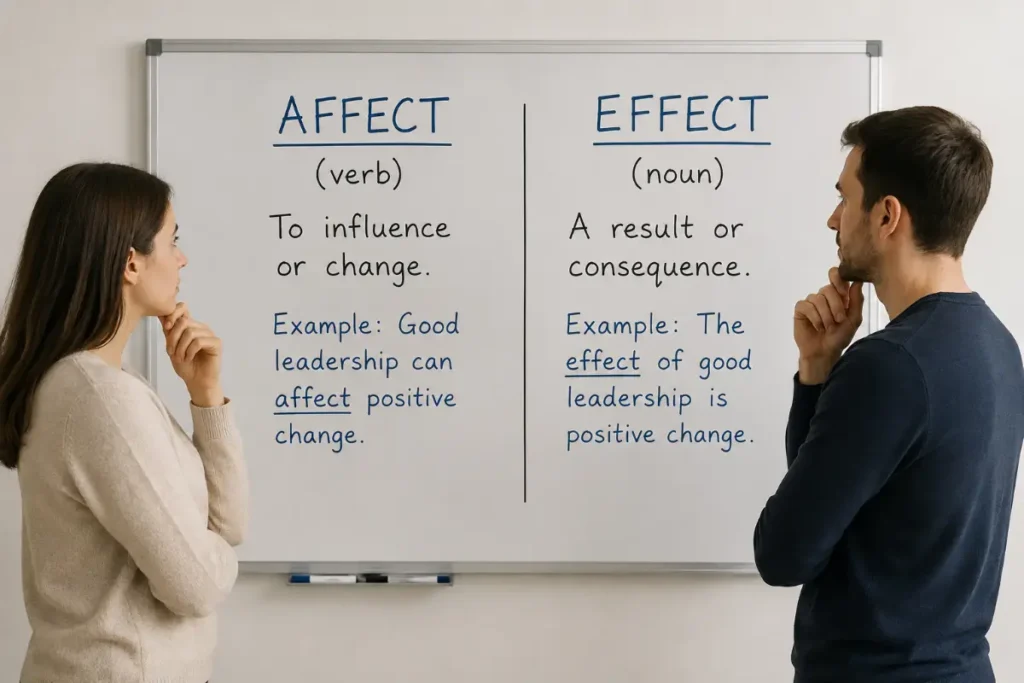
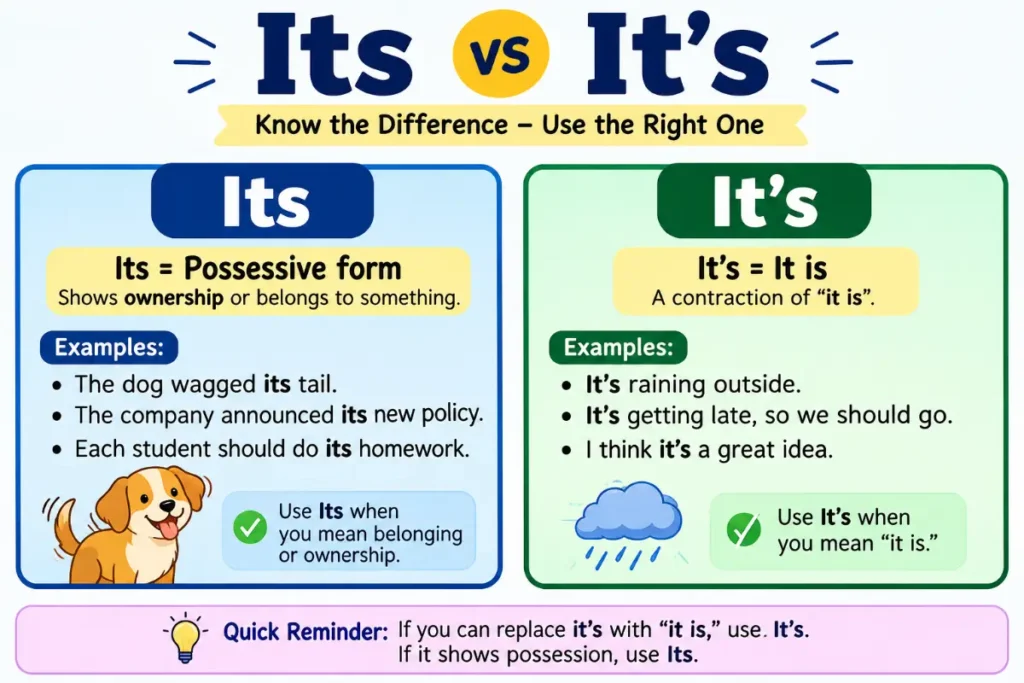
Unlike affect/effect or its/it’s, the who/whom confusion isn’t really about spelling or sound-alike words — it’s about a grammatical concept, the subject/object distinction, that English mostly stopped marking centuries ago. Modern English pronouns like “you” don’t change form based on whether they’re the subject or object of a sentence (“you” is “you” either way), so most speakers have lost the instinct for tracking that distinction at all.
“Who” and “whom” are among the last holdouts of a case system that used to be far more extensive in English, similar to how German or Latin still marks nouns and pronouns differently depending on their grammatical role. That’s why this particular rule can feel like it’s testing a skill most of us never fully developed, rather than one we’re simply forgetting.
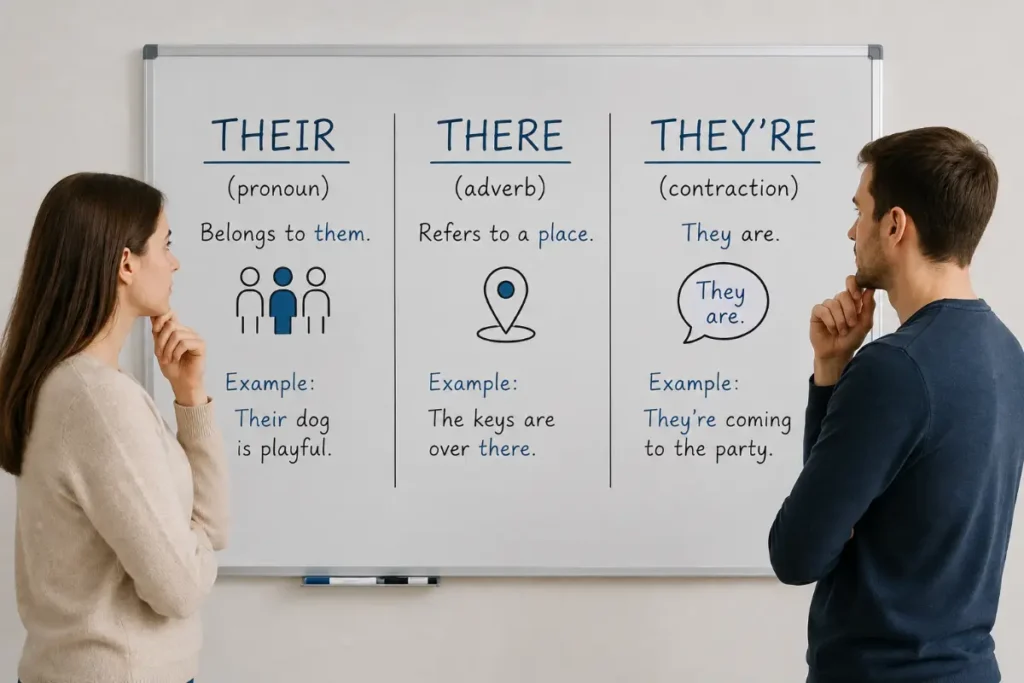
It’s a related kind of confusion to their, there, and they’re — different mechanism, same underlying experience of a rule that requires actively parsing sentence structure rather than just recognizing a familiar word.
Who: The Subject
“Who” performs the action of the verb — it’s doing something, not having something done to it.
Examples:
- Who is coming to the party? (Who is doing the coming)
- Who wrote this report? (Who did the writing)
- I wonder who left this note. (Who did the leaving)
- Who’s responsible for this decision? (Who holds the responsibility)
- The person who answered the phone was helpful. (Who did the answering)
In every case, “who” could be swapped with “he,” “she,” or “they” and the sentence would still make grammatical sense as a statement.
Whom: The Object
“Whom” receives the action of the verb, or follows a preposition (words like “to,” “with,” “for,” “about,” “by”).
Examples:
- Whom did you invite? (You invited him/her/them)
- To whom should I address this letter? (Address it to him/her/them)
- The client, whom we met last week, called again today. (We met him/her/them)
- With whom are you traveling? (Traveling with him/her/them)
- Whom should I ask for help? (Ask him/her/them for help)
Notice that whom shows up especially often right after a preposition — “to whom,” “with whom,” “for whom,” “by whom.” That’s one of the more reliable patterns to watch for, since prepositions almost always take an object, not a subject.
The same “watch what comes right before the word” instinct helps with its and it’s too — context immediately around the word usually tells you more than trying to recite the abstract rule from memory.
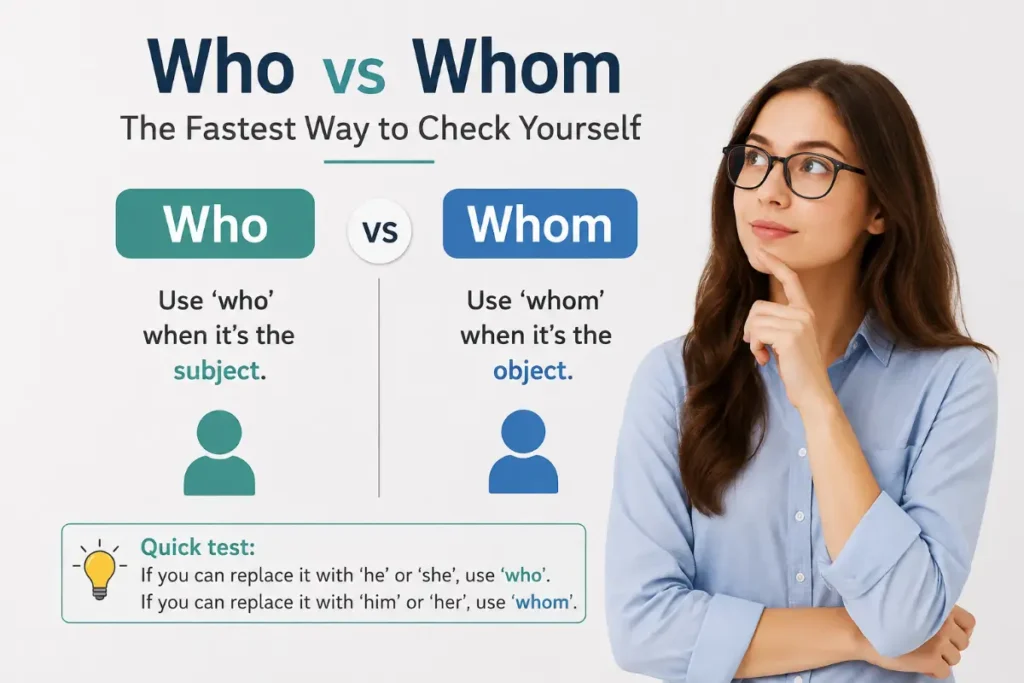
The Fastest Way to Check Yourself
Here’s the “he/him” substitution test in more detail, since it’s genuinely the fastest and most reliable method:
- Turn the sentence (or the relevant clause) into a statement, replacing who/whom with a placeholder.
- Answer it using “he” or “him.”
- If “he” sounds right, use who. If “him” sounds right, use whom.
Let’s walk through a trickier example: “Who/whom do you think will win?” This one trips people up because “do you think” sits in the middle, disrupting the usual pattern. Strip out “do you think” mentally — “Who/whom will win?” becomes the real question. Answer it: “He will win.” Since “he” fits, the answer is who: “Who do you think will win?”
Here’s another common trap: “Who/whom should I say is calling?” Again, strip the interrupting phrase: “Who/whom is calling?” Answer: “He is calling.” So it’s who: “Who should I say is calling?”
The M-for-M memory trick is worth mentioning too: whom and him both end in M. If the answer to your test sentence is “him,” the question needs “whom.” This tiny mnemonic sticks with a lot of people better than the subject/object terminology does.
Who vs. Whom: Side-by-Side Comparison
| Who | Whom | |
|---|---|---|
| Grammatical role | Subject | Object |
| Performs or receives the action | Performs it | Receives it |
| Substitution test | He / she / they | Him / her / them |
| Often follows | — | A preposition (to, with, for, by) |
| Example | Who called? | Whom did you call? |
| Formality | Standard in all contexts | Increasingly formal-sounding |
Does “Whom” Even Matter Anymore?
This is worth addressing honestly: in everyday spoken American English, “whom” has become genuinely rare, and using “who” in a spot that technically calls for “whom” almost never sounds wrong to a listener. Sentences like “Who did you invite?” are completely standard in speech and in most informal writing, even though a strict grammarian would say “whom did you invite?” is technically correct.
Merriam-Webster’s own usage notes acknowledge this directly — “whom” now carries a formal, sometimes stiff tone, and defaulting to “who” is considered acceptable in all but the most formal writing. Where “whom” still holds firm is in set phrases (“to whom it may concern”), immediately after a preposition in formal writing (“with whom,” “for whom”), and in academic, legal, or highly polished professional writing where precision is expected.
In other words: knowing the rule matters, but knowing when it matters, matters just as much. A casual email or a text message that uses “who” throughout won’t read as wrong. A cover letter, academic paper, or formal business letter is where getting whom right (or knowing when to sidestep it entirely) makes more of a difference.
For another useful perspective, check out Adverse vs Averse: 5 Common Mistakes to Avoid (2026 Guide).
Common Mistakes People Make
Mistake 1: “Whom is calling, please?” Should be “Who is calling, please?” — this is the subject of the sentence (he/she is calling), so “who” is correct. This is a common hypercorrection, where someone uses “whom” because it sounds more formal, without checking whether the grammar actually calls for it.
Mistake 2: “I don’t know who to send this to.” In strict formal grammar, this should be “whom to send this to,” since “to” is a preposition taking an object. That said, “who to send this to” is extremely common and accepted in everyday writing — this is one of the clearest examples of where the “rule” and real-world usage have diverged.
Mistake 3: “The manager who I spoke with was helpful.” Technically, since “who” here follows the implied preposition “with” (spoke with him), formal grammar prefers “whom I spoke with was helpful.” In casual and even many professional contexts, though, “who” reads naturally and isn’t likely to be flagged.
Mistake 4: Overcorrecting into “whom” everywhere. This is probably the single most common whom-related error — people learn that “whom” sounds more sophisticated and start inserting it anywhere a who/whom decision could apply, without actually running the he/him test. “Whom is going to the meeting?” is simply wrong; the sentence needs a subject, so it should be “Who is going to the meeting?”
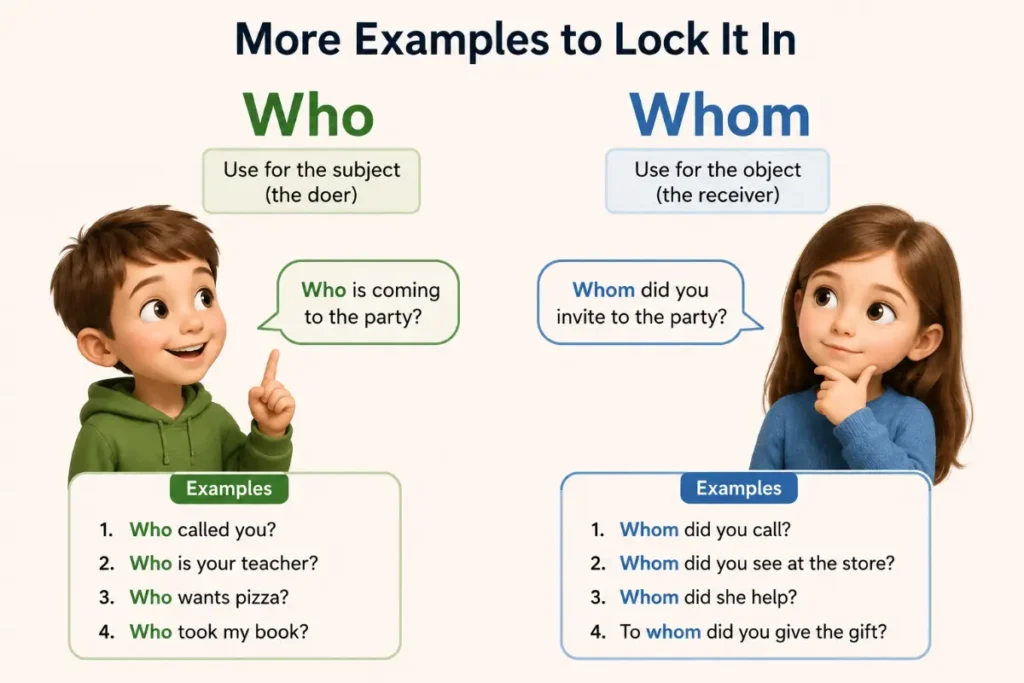
More Examples to Lock It In
- Who left their umbrella here, and to whom should I return it?
- The professor, whom everyone respected, retired this year.
- Who’s responsible for approving this, and whom do I need to notify?
- I’m not sure who called, but I’ll ask whom they were trying to reach.
- Whom did the committee select, and who announced the decision?
- The candidate who impressed us most is the one whom we’re recommending.
- For whom is this package intended, and who signed for it?
- Who wrote the letter, and to whom was it addressed?
What the Style Guides Say
Merriam-Webster explains the distinction in exactly these subject/object terms, but also notes candidly that “whom often sounds fussy and unnatural in regular speech and writing, even when it is technically correct” — and that using “who” instead is standard practice in all but the most formal registers. The AP Stylebook maintains the traditional subject/object rule for news writing, where precision and formality both matter. The Chicago Manual of Style takes a similar position for published and academic writing, while acknowledging that “whom” is fading from casual usage.
Purdue OWL and most university writing centers teach the he/him substitution method as the standard, reliable way to resolve who/whom questions, precisely because it sidesteps the need to memorize grammatical terminology.
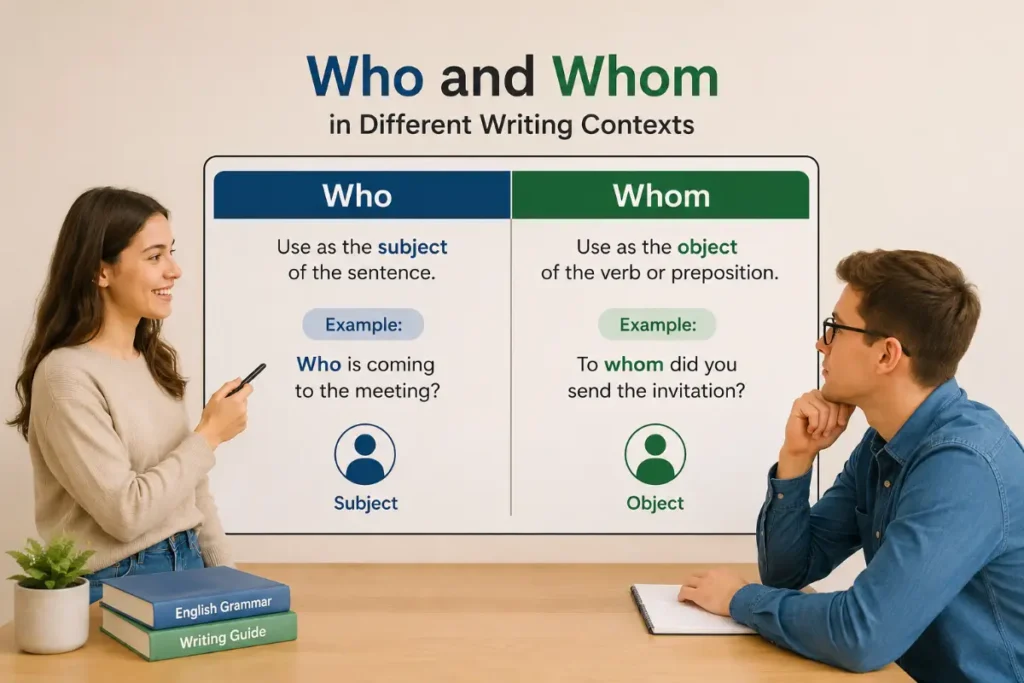
Who and Whom in Different Writing Contexts
In casual writing and speech, “who” has essentially taken over both roles for most speakers, and this is now considered completely standard, not a mistake. Texting “who did you talk to?” rather than “whom did you talk to?” won’t register as an error to virtually any reader.
In professional writing, whom still shows up in fixed, formal phrases — “to whom it may concern” being the most common — and using it correctly in cover letters, formal emails, and business correspondence can subtly signal polish, as long as it’s used correctly and not just sprinkled in for effect.
In academic and legal writing, precision matters more, and whom is expected in its correct object position, particularly following prepositions. Legal documents in particular tend to preserve formal grammar longer than other genres, so who/whom precision matters more here than almost anywhere else.
In journalism, AP style still generally expects correct who/whom usage in published copy, even though reporters may use “who” more loosely in quotes or casual asides.
Practice Exercise
Fill in the blank with either “who” or “whom.” Answers are listed right after — try each one before checking.
- ______ is in charge of this project?
- ______ did you speak with at the conference?
- The woman ______ answered the phone was very polite.
- To ______ should I send the invoice?
- ______ left this note on my desk?
- I don’t know ______ to trust anymore.
- The client, ______ we met last week, signed the contract.
- ______ wants to volunteer for the event?
- For ______ is this gift intended?
- ______ do you think will win the award?
- The teacher ______ inspired me the most retired this year.
- With ______ are you carpooling tomorrow?
- ______ should I ask about the schedule change?
- The candidate ______ we interviewed seemed well-qualified.
- ______ is responsible for locking up at night?
- I wonder ______ they’re planning to hire.
- The author, ______ I’ve admired for years, is releasing a new book.
- ______ called the meeting for this afternoon?
- By ______ was this decision made?
- ______ do you believe deserves the promotion?
Answer Key
- Who
- Whom
- who
- whom
- Who
- whom
- whom
- Who
- whom
- Who
- who
- whom
- Who
- whom
- Who
- whom
- whom
- Who
- whom
- Who
If you got sixteen or more correct, the he/him substitution test has already become second nature. Questions like 10 and 20 (with “do you think” or “do you believe” tucked in the middle) are the trickiest pattern here — if those slipped you up, go back and try mentally removing the interrupting phrase before running the test again.
Frequently Asked Questions
Is it ever wrong to just use “who” everywhere?
In casual and most professional writing, no — using “who” in a spot that technically calls for “whom” is now widely accepted and rarely noticed. It only becomes a real issue in strictly formal writing (academic papers, legal documents, very polished business correspondence) or in fixed phrases like “to whom it may concern,” where “who” would look distinctly wrong.
What’s the deal with “to whom it may concern”?
This is a fixed, formal phrase used to open a letter when you don’t know the specific recipient. “Whom” is correct here because it’s the object of the preposition “to” — you’re concerning the letter to someone. This phrase has stayed frozen in its formal form even as “whom” has faded elsewhere, largely because it’s a set business convention rather than a sentence people construct fresh each time.
Is “whomever” the same kind of rule as “whoever”?
Yes — “whoever” follows the same logic as “who” (subject), and “whomever” follows the same logic as “whom” (object). The same he/him substitution test works for both pairs.
Why does “whom” sound so old-fashioned now?
Language naturally sheds grammatical distinctions that speakers don’t find useful enough to maintain, and English has been losing case markings on pronouns for centuries — “whom” is one of the last vestiges of a system that used to mark subject and object forms much more broadly. Its increasingly formal, almost old-fashioned tone is simply that historical shift continuing in real time.
How can I tell if a sentence I’m unsure about actually needs “whom,” or if “who” is fine?
Run the he/him test first. If it comes back “whom” but the writing is casual (an email, a text, a blog comment), you can generally use “who” without it reading as an error. If the writing is formal (a cover letter, an academic paper, a legal document), stick with whatever the he/him test tells you, since precision is expected in those contexts.
Before moving on, you may also want to read Less vs Fewer: 5 Easy Rules You’ll Never Forget (2026) for more helpful grammar tips.
The Bottom Line
Who is the subject, doing the action. Whom is the object, receiving the action or following a preposition. The he/him substitution test resolves nearly every case in seconds, and in casual writing, defaulting to “who” is genuinely fine in most situations. Save your whom-precision for formal writing, fixed phrases like “to whom it may concern,” and the moments where getting it exactly right actually matters to your reader.