Your friend sends a long message about her day. You reply with a quick joke, and she answers with one word: ttyl. Is she mad? Is she leaving? Should you answer?
Relax. It is one of the friendliest bits of slang around. If you have wondered about the TTYL meaning in text, the short version is that it is a casual goodbye with a promise to talk again.
This guide covers the full story. You will see what the letters stand for, where the term came from, how to use it, and how to reply. You will also learn when to skip it, because a few places call for the full phrase.
Keep reading, and you will never wonder about a ttyl again.
You may also find Emphasize Text Meaning: 7 Clear Answers (2026) helpful if you want to explore this topic further.
Quick Definition
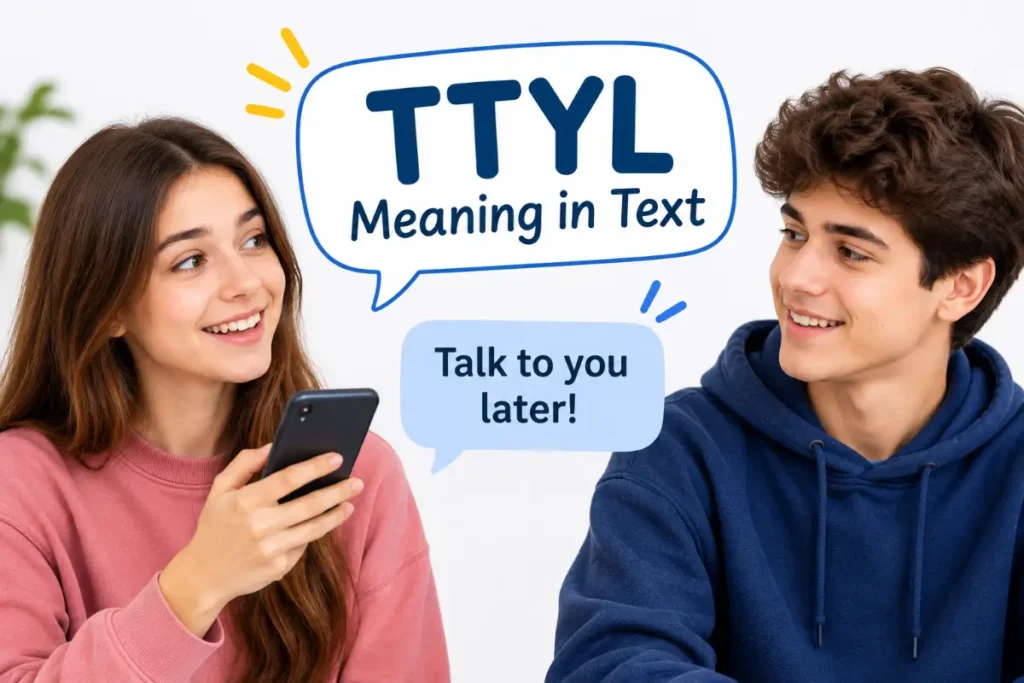
TTYL stands for talk to you later. It is a casual sign off used in texts, chats, and comments to end a conversation for now while hinting that you will pick it up again. The TTYL meaning in text is simple and has stayed the same for years.
Quick Answer
When someone texts ttyl, they are saying goodbye for now. They plan to talk to you again later, whether by text, call, or in person. It is polite, warm, and not rude. You can reply with ttyl back, a short goodbye, or nothing at all.
What Does TTYL Stand For?
TTYL is an initialism. Each letter stands for a word, and most people read it out as four separate letters.
| Letter | Stands For |
|---|---|
| T | Talk |
| T | To |
| Y | You |
| L | Later |
People type it in capitals or lowercase. Both work. Lowercase ttyl feels more relaxed, while capitals feel a little louder. The meaning does not change either way.
Note that talk here is flexible. It does not always mean a phone call. In most chats, it means you will message again, call, or meet up when the time is right.
Where Did TTYL Come From?
No one can say who typed it first. What we know is that texting and early online chat rewarded short messages. Old text messages had tight character limits, and typing on a number pad was slow. Short forms saved time and effort.
Some people trace the phrase to a British saying from the 1980s, ta ta, you all. That link is only a theory, and nobody has proven it. What is clear is that ttyl became a standard sign off in chat rooms and texting, and it appeared in online slang dictionaries by the early 2000s.
For another useful perspective, check out FML Meaning in Text: 7 Honest Facts & Replies (2026).
It outlived many other short forms because it solves a real problem. Leaving a chat without a word can feel cold. A quick ttyl closes the talk in a friendly way.
What TTYL Really Signals
The letters say one thing, but the message carries a few more.
- I am leaving for now. Something came up, like dinner, class, or a call.
- We are good. Nothing is wrong between us. I just need to step away.
- I will be back. There is a plan, even a loose one, to continue later.
- No reply needed. The chat can end here without anyone feeling ignored.
The word later has no clock attached. It can mean an hour from now, tonight, or next week. That looseness is a feature. It keeps the sign off light and free from pressure.
When to Use TTYL
Use it when you are ending a casual chat and plan to talk again. It fits best in a few spots.
- With friends and family. It is the natural way to wrap up a quick chat.
- In a busy moment. You have to run, and you want to leave on a warm note.
- At the end of a long thread. The talk has run its course, and you want a soft close.
- In group chats. It tells everyone you are stepping out without a big speech.
A useful rule is to use it only when you mean it. If you have no plan to talk again, a plain bye or good night is more honest.
TTYL Tone by Setting
The same four letters can feel different depending on where you use them.
| Setting | How It Feels | Better Choice? |
|---|---|---|
| Friend or family chat | Warm and casual | TTYL works well |
| Dating chat | Friendly, can feel like a pause | TTYL or TTYS if you want to sound eager |
| Group chat | Light and quick | TTYL is fine |
| Work chat with a close coworker | Casual but acceptable | Depends on your office |
| Email to a boss or client | Too casual | Write it out |
| Job application | Out of place | Write it out |
If you are unsure, spell it out. Talk to you later is clear, polite, and never wrong.
Is TTYL Rude?
No. It is one of the least rude things you can type. People take it as a friendly goodbye. In fact, it is kinder than disappearing without a word.
A few edge cases are worth knowing.
- Tone shifts with punctuation. ttyl. with a period can feel flat or cold. ttyl! or ttyl with a heart feels warm.
- Timing matters. If someone just shared bad news and you reply ttyl, it can feel dismissive.
- Follow through counts. If you say it and then never talk again, the goodwill fades.
None of these make the term rude on its own. They are just reminders to pay attention to the mood.

TTYL vs Other Sign Offs
Texting has a long list of goodbye shortcuts. They look alike, but each has its own feel.
| Slang | Stands For | How It Differs From TTYL |
|---|---|---|
| TTYL | Talk to you later | The everyday version with no set time |
| TTYS | Talk to you soon | Warmer, suggests a shorter wait |
| TTYT | Talk to you tomorrow | Names a specific day |
| TTYL8R | Talk to you later | A playful, chattier spelling |
| TTYN | Talk to you never | A sarcastic joke, not a real goodbye |
| BRB | Be right back | You will return within minutes |
| BBL | Be back later | Like TTYL, but you plan to return to this chat |
| GTG | Got to go | Explains why you are leaving |
| L8R | Later | A short, casual goodbye |
People often pair them. GTG, ttyl tells the other person why you are leaving and that you will be back. It is a tidy two part goodbye.
TTYL vs TTYS
These two get mixed up most. TTYL means later, and TTYS means soon. The difference is small, but it can change the mood. TTYS hints that you want to talk again before long, which makes it feel a bit more eager. Use it when you do not want a long gap.
7 Simple Ways to Use TTYL
Here are seven easy ways to work it into your chats, with examples you can borrow.
- As a plain goodbye. Okay, I have to run. ttyl!
- With a reason. Dinner is ready. ttyl.
- With a plan. Meeting starts soon, ttyl after work.
- With a warm touch. Love you, ttyl works well with family and close friends.
- After a phone or video call. Great catching up, ttyl.
- In a group chat. Heading out, ttyl everyone.
- As a playful sign off. ttyl, ttys, ttyt, you get the point. It is silly, and friends usually enjoy it.
Pick the style that matches how you already talk. A quick, easy sign off lands better than a forced one.
How to Reply to TTYL
You never have to reply. The chat can end quietly. But a short answer is a nice touch. Try one of these.
- ttyl! Easy and matching.
- Talk soon! Warm and natural.
- Have a good one. Friendly and a bit more grown up.
- Bye for now! Simple and sweet.
- Okay, ttyl. Text me later. Adds a small plan.
- A wave or heart emoji. Quick and friendly.
If you want to keep the chat going, you can answer with a question instead. A short Wait, one more thing works if you forgot to say something.
Sample Chats
Examples show how the term sounds in real life.
Quick goodbye
Sarah: My battery is at 2%, so my phone might die.
Emily: Okay, text me when you get home.
Sarah: Will do, ttyl.
Busy moment
David: Mom is calling me for dinner.
Jessica: Go eat! We can finish this game later.
David: ttyl!
Sign off with a plan
Maya: I have class until 3. Talk tonight?
Chris: Sounds good. ttyl.
In each chat, the sign off is friendly, short, and ends the talk without any hurt feelings.
Where Not to Use TTYL
This is casual slang, so keep it out of formal places.
- Work emails. Use a standard closing like Best regards or Talk soon.
- Messages to clients or managers. Spell out talk to you later if you want a goodbye.
- School emails. Teachers expect full sentences.
- Job applications and cover letters. Use professional language.
- Serious or sad chats. In a sensitive moment, a full sentence feels kinder.
Culture and age matter too. Younger users on Snapchat or TikTok may feel it is old fashioned, while older relatives may use it all the time. Neither is wrong.
Why Goodbyes Matter in Text
Face to face, a goodbye comes with a smile, a wave, or a tone of voice. Text strips all of that away. A chat that simply stops can leave the other person guessing. Did I say something wrong? Are they busy? Are they gone for good?
A short sign off fills that gap. Four letters tell the other person that everything is fine and that you will be back. It takes two seconds to type, and it saves the other side from needless worry. That is the real job of ttyl, and it explains why the habit has lasted so long.
What If Someone Says TTYL and Never Talks Again?
It happens. A ttyl does not guarantee anything, and sometimes life gets busy. Here is how to handle it.
- Give it a few days. People forget, and later can mean a lot of things.
- Send a light check in. A short Hey, how did that go? is friendly and low pressure.
- Watch the pattern. If someone often says it and never follows up, you have learned something about them.
- Do not take it personally. One missed chat is rarely about you.
If you are the one who says it, try to keep the promise. Even a short message the next day keeps goodwill alive.
Small Details: Caps, Punctuation, and Emojis
Little choices change how the sign off feels.
| Style | How It Feels |
|---|---|
| TTYL | Loud and bright |
| ttyl | Relaxed and easygoing |
| ttyl! | Warm and upbeat |
| ttyl. | Flat or a bit cold |
| ttyl 💛 | Sweet and affectionate |
| ttyl lol | Playful and light |
Emojis add warmth. A heart, a smile, or a wave makes the goodbye feel kinder. In a serious chat, skip the emoji and keep things simple.
TTYL on Different Apps
The meaning never changes, but each app has its own rhythm.
| App | How People Use It |
|---|---|
| Regular texts | A quick sign off after a short chat |
| Common in family and friend chats, often with an emoji | |
| Snapchat | Less common, since many chats just fade out |
| Instagram DMs | Used to close a chat politely |
| Discord and gaming chats | Pairs often with GTG when someone leaves a game |
| Group chats | A light way to step out without a speech |
Gaming is a good example. A player says gtg, ttyl and leaves the lobby. Everyone knows what that means, and no one feels brushed off.
How to Say TTYL Without Sounding Cold
A goodbye should feel kind. These small tweaks keep it warm.
- Add a word of thanks. Thanks for the chat, ttyl! shows you enjoyed the talk.
- Name the reason. Heading to class, ttyl is friendlier than a bare sign off.
- Pick a clear time when you can. ttyl tonight sets an easy expectation.
- Use an emoji if it fits. A small heart or smile adds warmth in a casual chat.
- Skip it when feelings are heavy. If someone is upset, a full message that shows you care will land better than four letters.
Think of it as the digital version of a wave at the door. The wave works best when it comes with a smile.
FAQs
What is the TTYL meaning in text?
TTYL means talk to you later. It is a casual way to end a chat while showing you plan to talk again.
Does TTYL mean I have to call someone?
No. In most chats, talk means message, call, or meet up. Nobody expects a phone call unless you say so.
Is TTYL rude?
No. People see it as friendly and polite. It is kinder than leaving without a word. Punctuation and timing can change the tone, so match the mood.
What is the difference between TTYL and TTYS?
TTYL means talk to you later, with no set time. TTYS means talk to you soon, which suggests a shorter gap.
How do I reply to TTYL?
You can send ttyl back, say talk soon, wave, or send a heart. You can also skip the reply. A response is nice but not required.
Can I use TTYL in an email?
It is best to avoid it in work or school emails. Use a standard closing or write out talk to you later.
What does TTYL8R mean?
It is a playful spelling of talk to you later. The number eight stands in for the sound at the start of later.
Should I type TTYL in capitals or lowercase?
Either works. Lowercase feels more relaxed, and capitals feel bolder. Pick whichever matches your style.
Before moving on, you may also want to read BR Meaning in Text: 4 Clear Meanings & Replies (2026) for more helpful grammar tips.
Final Thoughts: A Small Goodbye With a Big Smile
The TTYL meaning in text is easy to remember. It stands for talk to you later, and it works as a warm, casual goodbye. It tells the other person you are leaving for now, nothing is wrong, and you plan to talk again.
Use it with friends, family, and group chats. Skip it in formal emails and serious moments. When someone sends it to you, a short reply or a wave is plenty, and silence is fine too.
Say it when you mean it, and keep your word when you can. That small bit of follow through is what makes a simple sign off feel kind.